


Introduction:
Electric vehicles are gaining popularity worldwide as more and more people are becoming aware of the benefits of sustainable transportation. With the rise of electric vehicles, there is also an increase in the need for research and development in this sector. Final year projects are an excellent way for engineering students to gain practical knowledge and experience in their field of interest. In this blog post, we will discuss the top 10 electric vehicle final year projects for engineering students.
Importance of Electric Vehicle Final Year Projects:
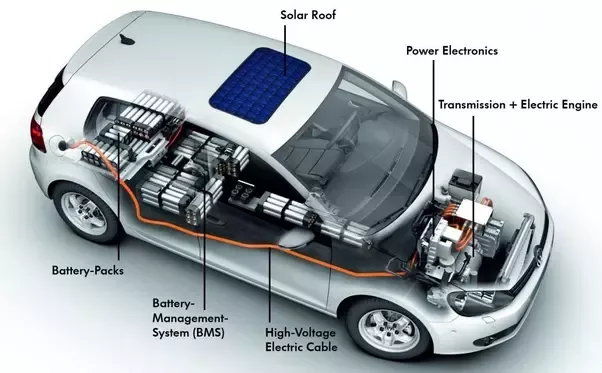
Final year projects are an essential part of engineering education as they provide students with practical experience and exposure to the industry. In the electric vehicle sector, final year projects play a crucial role in the development of new technologies and innovation. They can also help students gain skills in areas such as electric vehicle design and development, battery management systems, charging infrastructure, project management, and more.
Top 10 Electric Vehicle Final Year Projects for Engineering:
(Each project includes outcomes, prerequisites, bill of materials, architecture, and a step-by-step build & validation plan.)
How to Pick the Right Project (Read This First)
Pick a project that maps to your core strengths (power electronics, control, embedded, thermal, data/ML, mechanical).
Lock scope early: a focused, working prototype beats an ambitious half-build.
Document everything: requirements → design calculations → schematics → firmware → tests → results → limits → future work.
Safety first: use fuses, isolation, grounded benches, insulated tools, PPE, low-voltage prototypes before HV scaling.
Evaluation rubric (use internally):
- Problem framing & requirements (10%)
- Design depth, calculations, and trade-offs (25%)
- Implementation quality (hardware/firmware/mechanics) (25%)
- Testing, validation, and data quality (20%)
- Documentation, reproducibility, and presentation (10%)
- Safety & ethics (10%)
1) Smart Battery Management System (BMS) with Estimation (SoC/SoH) and Active Balancing
Why it’s strong: Every EV needs a robust BMS. This project blends electrochemistry, estimation theory, embedded systems, and hardware design.
Learning Outcomes
- Battery pack topology, protection, and sensing
- State-of-Charge (SoC) via Coulomb counting + EKF/UKF fusion
- State-of-Health (SoH) via capacity and internal resistance tracking
- Passive vs active balancing; cell equalization control
- CAN communication and data logging
Prerequisites
Basic circuits, microcontrollers (STM32/ESP32), filters, MATLAB/Python for estimation, PCB basics.
Bill of Materials (indicative)
- 8–12 lithium-ion cells (e.g., 18650) with holders, use low-voltage pack (≤48 V) for safety
- Current shunt (e.g., 50 A/75 mV for higher currents; for low-power demo 10 A/50 mV is fine)
- Voltage sense front-end (divider + precision op-amps or dedicated battery monitor IC)
- Temperature sensors (NTC/DS18B20)
- Microcontroller board (STM32 Nucleo / ESP32)
- Cell balancing ICs or MOSFETs + inductors for active balancing demo (or start passive)
- High-side current sense amplifier (INA226/INA240)
- Isolated CAN transceiver (if using CAN)
- Fuses, contactor/relay (low-voltage), TVS diodes, enclosure
System Architecture (text diagram)
Cells → Voltage Sensing → MCU
Cells → Temp Sensors → MCU
Pack Bus → Shunt → Amplifier → MCU
MCU ↔ Balancing Stage (MOSFET/inductor)
MCU ↔ CAN/Serial → Logger/Dashboard
Safety: Fuse + Contactor + TVS
Step-by-Step
- Requirements & Safety Limits
- Choose cell chemistry and nominal pack voltage (e.g., 4s–12s).
- Define absolute min/max cell voltage, charge/discharge current, and pack temperature limits.
- Add a main fuse sized 1.25× peak current, and a low-voltage contactor for emergency cut-off.
- Sensing Design & Calculations
- Voltage dividers for each cell (or use a dedicated multi-cell monitor IC).
- Current sense: pick shunt so that full-scale drop ≤50–100 mV to keep dissipation low.
- Filter design (RC) to tame switching noise.
- ADC resolution check: ensure LSB corresponds to ≤2–5 mV at cell terminals.
- Firmware Foundations
- Drivers for ADC, GPIO, UART/CAN, timers.
- Periodic tasks (1–10 Hz) to sample voltages, current, temperature.
- Coulomb counting (integrate current over time).
- Open-circuit voltage (OCV) table vs SoC for your cell (from datasheet/characterization).
- SoC Estimation with EKF (concise outline)
- State vector: x = [SoC, V_RC] where V_RC captures diffusion/RC polarization.
- Inputs: I(t). Measurement: terminal voltage Vt.
- Nonlinear model: Vt = OCV(SoC) − I·R0 − V_RC;
SoC(k+1) = SoC(k) − (η·Δt·I)/(Q_nom). - Implement EKF predict/update; tune process and measurement covariances Q,R with logged data.
- SoH Estimation (capacity & resistance)
- Capacity fade: compare delivered Ah from full to empty vs nominal (over cycles) → SoH_cap = Q_meas/Q_nom.
- Resistance growth: incremental pulse test (ΔV/ΔI) at mid-SoC for R0; track trend.
- Balancing Strategy
- Start with passive (bleed resistors) to validate logic.
- Extend to active demo on two adjacent cells with inductor-based energy transfer; control with PWM and current limit.
- Balancing triggers near top of charge or when ΔV_cell > threshold.
- CAN/Serial Telemetry & Dashboard
- Send frames: pack V/I/P, cell voltages, temps, SoC/SoH, alarms.
- Build a simple Python/Streamlit dashboard.
- Validation Plan
- Charge/discharge cycles at different C-rates; log and compare SoC(EKF) vs coulomb counter.
- Temperature response under load; check derating/shutdown thresholds.
- Balancing effectiveness: max cell ΔV before/after.
Deliverables
Schematics/PCB, firmware repo, EKF notebook, test logs, safety assessment, user manual.
Extensions
Cell aging modeling; fault detection (open cell, sensor failure); cloud telemetry.
2) Field-Oriented Control (FOC) for PMSM/BLDC with Regenerative Braking (STM32)
Why it’s strong: Motor control is foundational. You’ll implement Clarke-Park transforms, PI speed/current loops, and regen.
Learning Outcomes
- PMSM/BLDC modeling, Clarke/Park math
- PI control design and tuning
- Sinusoidal PWM/SVPWM generation
- Current sensing, rotor position (Hall/encoder)
- Regenerative braking control and DC bus handling
Prerequisites
Control systems, power electronics basics, MCU timers/ADC/DMA, safety with high currents.
Bill of Materials
- Low-voltage PMSM/BLDC (e.g., hoverboard/hub motor 24–48 V)
- Inverter stage (3-phase bridge with MOSFETs, gate driver with dead-time, current sensors)
- STM32 Nucleo/Discovery with FOC library or bare-metal
- Encoder or Hall sensors
- DC supply + shunt + contactor + fuse + pre-charge resistor for bus caps
Architecture
DC Source → Precharge → 3-Phase Inverter → Motor
Phase Currents → ADC → MCU (Clarke/Park, PI loops, SVPWM)
Rotor Position (Hall/Encoder) → MCU
Bus V/I → MCU (regen limits)
Step-by-Step
- Model & Requirements
- Identify motor constants (Ke, Kt), phase resistance/inductance, nominal speed/torque.
- Define speed/torque targets and bus voltage/current limits.
- Power Stage & Sensing
- Gate driver with proper dead-time; bootstrap supply if needed.
- Current measurement: low-side shunts or inline phase sensors; anti-alias filters.
- FOC Control Loops
- Clarke: (iα, iβ) from (ia, ib, ic)
- Park: (id, iq) using rotor angle θ
- Inner PI loops on id (flux) and iq (torque).
- Outer PI on speed; cascaded structure.
- SVPWM Generation
- Map vd,vq → vα,vβ → duty cycles.
- Ensure modulation index within limits; handle over-modulation safely.
- Regen Braking
- Negative iq command → generator mode.
- Monitor DC bus voltage; enable dynamic braking resistor if bus rises too high.
- Smooth transition between motoring and regen.
- Tuning & Commissioning
- Lock rotor test to estimate Rs, Ld, Lq (or use datasheet).
- Tune current loop first (fast), then speed loop (slower).
- Step responses: verify settling time, overshoot, and current ripple.
- Safety & Interlocks
- Overcurrent shut-off, over/undervoltage, overtemp, loss of rotor sensor.
- Fault LED/logs; fault latching and reset logic.
Validation
- Efficiency vs speed/torque points
- Regen energy recovery measurement (bus current integration)
- Thermal inspection of MOSFETs and motor at rated load
Deliverables
FOC firmware, motor ID notes, tuning report, oscilloscope captures, safety checklist.
Extensions
Sensorless FOC via observer; MTPA/MTPV; field-weakening for higher speed.
3) Smart AC Level-2 EVSE (Charging Station) with Dynamic Load Management & OCPP-Style Backend
Why it’s strong: Builds a real-world charging product: power metering, contactor control, user auth, OTA updates, cloud analytics.
Learning Outcomes
- EVSE basics (pilot signal, relays/contactors, RCD), energy metering
- RFID/app authorization, dynamic load management among multiple EVSEs
- Backend integration (simulate OCPP-like messages over MQTT/HTTP)
- Safety compliance thinking (RCD, insulation monitoring, enclosure IP)
Prerequisites
AC power safety, embedded (ESP32/Raspberry Pi), networking, basic backend skills.
Bill of Materials
- AC contactor/relay rated for your demo load (e.g., 230 V/16 A)
- Energy meter module (e.g., ADE7753 or smart meter)
- ESP32 dev board (Wi-Fi/BLE), RFID reader (RC522), LCD/LEDs
- Current transformer (CT) for leakage detection demo, RCD module
- Enclosure, cables, fuses, emergency stop
Architecture
Mains → RCD → Contactor → Outlet
Metering (V/I/PF) → MCU
Pilot/Control Logic → MCU
RFID/App → MCU → Cloud (MQTT/HTTP)
Load Manager → Allocates current among EVSEs
Step-by-Step
- Functional Requirements
- Start/stop charging via RFID/app.
- Meter energy and log sessions.
- Dynamic current cap per EVSE based on building limit.
- Hardware Integration
- Wire mains → RCD → contactor → socket.
- Sense current and voltage; calibrate meter IC.
- GPIO to drive contactor; inputs for E-Stop, door switch.
- Firmware
- State machine: Idle → Authorized → Pre-charge check → Charging → Fault → Idle.
- Session records: start time, energy kWh, user ID.
- Heartbeats & events to backend; OTA update hook.
- Backend (Simulated OCPP-style)
- Build simple broker/server to accept heartbeats, authorize IDs, set max current, retrieve logs.
- Multi-EVSE dynamic load algorithm:
- Input: BuildingLimit, EVSE_i requests.
- Allocate via proportional fair share; enforce per-EVSE min/max.
- Safety & Tests
- Leakage test with CT; trip logic demo (do not build a real RCD unless certified—use a module).
- Contact bounce and stuck relay detection (measure current when OFF; if > threshold, fault).
Validation
- End-to-end session with RFID, energy reading vs external meter
- Multi-EVSE load management under constrained BuildingLimit
- Fault injection: open CT, sensor fail, network down
Deliverables
Schematic, wiring diagram, firmware, backend code, test logs, user guide, safety notes.
Extensions
Mobile app; tariffs/time-of-use pricing; reservation/queuing; integration with solar (see Project 6).
4) Liquid-Cooled Battery Thermal Management Testbench (with PCM Add-On)
Why it’s strong: Thermal is mission-critical in India and other hot climates. You’ll quantify heat generation and design cooling.
Learning Outcomes
- Heat generation modeling in cells/packs
- Liquid cooling plate design and flow rate calculations
- PCM selection and integration for peak-shaving
- Instrumentation and control (pumps, valves, sensors)
Prerequisites
Heat transfer, fluids, sensors/DAQ, basic machining or 3D printing.
Bill of Materials
- Battery module (e.g., 4s–8s) with controllable load (electronic load or inverter rig)
- Liquid cooling plate (aluminum plate + internal channels or off-the-shelf cold plate)
- Pump, reservoir, radiator/fan, coolant (water-glycol)
- Thermocouples/DS18B20 array, flow meter, pressure sensor
- Optional: PCM bricks/pouches rated near 40–45 °C
- Microcontroller/PLC + relays for pump/fan control; DAQ/logger
Step-by-Step
- Thermal Requirements
- Define safe cell temp range (e.g., 15–45 °C) and ΔT limit across module (<5 °C).
- Estimate heat generation: Q˙≈I2R+I⋅η_loss\dot{Q} \approx I^2 R + I \cdot \eta\_lossQ˙≈I2R+I⋅η_loss (include efficiency term).
- Cooling Plate Sizing
- Choose channel geometry; compute Reynolds number, pressure drop, required flow for target ΔT.
- Radiator sizing to reject peak heat at ambient +10 °C margin.
- Instrumentation Plan
- Place sensors at cell surfaces and coolant in/out.
- Log at ≥1 Hz; compute thermal resistance and time constants.
- Control Strategy
- On/Off or PID control of pump/fan based on hottest cell temp.
- Alarms at 45 °C; shutdown at 50 °C.
- PCM Integration (optional)
- Select PCM with melt range around desired cap; add near hot spots.
- Re-run duty cycles with and without PCM to quantify peak shaving.
- Test Protocols
- Constant current discharges at 0.5C, 1C, 2C.
- Charging test at 0.5C with ambient steps (25 → 35 → 45 °C if you have a thermal chamber or heated enclosure).
- Record ΔT across module, coolant ΔT, flow, pump power.
Validation
- Demonstrate temp control within spec on worst-case duty cycle.
- Plot thermal maps and compare “air only” vs “liquid” vs “liquid + PCM”.
Deliverables
CAD of plates/enclosure, flow/pressure calculations, control code, test datasets, comparative graphs, safety dossier.
Extensions
Model in COMSOL/Ansys Icepak; variable flow control for energy saving.
5) EV Telemetry, Diagnostics & Predictive Maintenance from CAN Data (IoT + ML)
Why it’s strong: Converts raw vehicle data into insights: range, faults, degradation, driver behavior, anomaly detection.
Learning Outcomes
- CAN bus sniffing and decoding
- Edge gateway design (ESP32/RPi) and secure IoT ingestion
- Feature engineering from time series
- Lightweight ML for anomaly/fault prediction
Prerequisites
Embedded networking, Python data science, basic ML, security best practices.
Bill of Materials
- Low-voltage EV platform or dev rig with CAN (or simulation)
- CAN transceiver (MCP2515/TCAN) + MCU/RPi
- Cloud database (TimescaleDB/InfluxDB) or local server
- Dashboards (Grafana/Streamlit)
Step-by-Step
- Signals of Interest
- Pack V/I, SoC, motor temperature, inverter temp, wheel speeds, DTCs.
- Build a DBC (signal definitions) or simple ID-to-payload map.
- Edge Gateway
- Read frames at 10–100 Hz; buffer & batch send.
- Secure channel: TLS over MQTT/HTTP; device keys.
- Data Model & Storage
- Time-series schema with tags for vehicle, trip, driver.
- Retention policies; downsampling for older data.
- Features & Labels
- Rolling means/variances, derivative of current, charge-throughput, temp gradients, regen events.
- Label known events: overtemp, power derate, fast-charge, hard braking.
- ML Baseline
- Start with simple thresholds → logistic regression → random forest.
- For anomaly detection, train Isolation Forest on “healthy” trips.
- Dashboard
- Live: current speed, power, SoC, alarms.
- Fleet analytics: energy per km vs temp, driver score, cell imbalance trend.
Validation
- Replay CAN logs with seeded anomalies; measure precision/recall.
- Compare predicted maintenance alerts vs ground truth.
Deliverables
Edge firmware, ingestion pipeline, DBC, ML notebooks, dashboards, case studies.
Extensions
On-device inference; OTA model updates; predictive range with route/weather inputs.

6) Solar-Assisted EV Charging Microgrid with Bidirectional Inverter (V2H Demo
Why it’s strong: Integrates PV, battery storage, inverter control, and an EV load; shows energy management and islanding logic.
Learning Outcomes
- MPPT for PV, DC bus control
- Inverter control (single-phase) and grid-tie safety logic (simulate if needed)
- Energy management strategies (self-consumption, time-of-use)
- V2H/V2L demonstration with a lab battery pack (not a real car battery)
Prerequisites
Power electronics, control, safety, microgrid basics.
Bill of Materials
- PV panels (small array for demo) + DC-DC MPPT stage
- Battery storage (low-voltage Li-ion or LFP) with small BMS
- Inverter kit (development-safe) or programmable AC source + load
- EV load emulator (resistive/programmable electronic load)
- MCU/FPGA for control, safety relays, measurement
Step-by-Step
- Operating Modes
- Grid-connected: PV → load; excess → charge battery.
- Islanded: battery/PV feed EV load within limits.
- V2H demo: battery → AC loads (show limited backup).
- MPPT Implementation
- Perturb & Observe or Incremental Conductance; verify tracking under irradiance steps.
- DC Bus & Inverter Control
- Regulate bus voltage; sinusoidal inverter with SPWM or SVPWM.
- Grid-sync (PLL) if you have a safe grid simulator; otherwise, islanded only.
- Energy Management Logic
- Objective: minimize grid import; maintain SOC between 30–90%.
- Scheduler: if tariff info available, pre-charge battery before peak hours.
- Safety
- Always use isolation where needed; follow lock-out/tag-out rules.
- If you do not have certified grid-tie hardware, keep it islanded and use a programmable AC source to emulate “grid.”
Validation
- Energy flow logs for a day; PV profile vs EV charging sessions
- MPPT efficiency; inverter efficiency at different loads
- Islanding transitions without brownouts (for demo loads)
Deliverables
System diagram, MPPT code, energy management logic, performance plots, safety checklist.
Extensions
Forecast-aware scheduling (weather + load prediction); demand response.
7) Swappable Battery Pack & Safety System for 2-Wheeler (Mechanical + Electrical + BMS Integration)
Why it’s strong: Addresses a real market trend; great for demonstrating design for manufacturability, ergonomics, and safety.
Learning Outcomes
- Mechanical design for quick-swap packs (latching, alignment, ingress protection)
- Electrical connector selection (arcing minimization, pin sequencing)
- Pack BMS integration and handshake with vehicle
- Safety: short-circuit protection, thermal runaway mitigation, venting
Prerequisites
Mechanical CAD, enclosure design, electrical interconnects, BMS basics.
Bill of Materials
- Cell holders (e.g., 18650/21700), nickel strips or tab-welded sub-modules
- Enclosure material (aluminum extrusion + end caps, or injection-moldable plastic)
- High-current connectors (Anderson/Amphenol style) with pre-charge pin
- BMS (off-the-shelf smart BMS for prototype)
- Latch/lock mechanism, gaskets, vents, handle, guides
Step-by-Step
- User Requirements
- Pack energy (e.g., 1.5–2.5 kWh), weight limit for safe handling (<12–14 kg), swap time <60 s.
- Electrical Architecture
- Series/parallel configuration for target voltage/capacity.
- Pre-charge resistor path and pin sequencing (pre-charge pin mates first).
- BMS communication pinout (UART/CAN/SMBus) to vehicle.
- Mechanical Design
- Guides/chamfers for blind-insertion; latch with tactile/audible feedback.
- IP rating target (IP54–IP65 for demo); gasket groove design.
- Venting path for worst-case pressure event (never block).
- Safety Systems
- Main fuse near pack positive; short-circuit testing at limited current.
- Thermal sensors near densest cell groups; firmware over-temp alarms.
- Vehicle Handshake
- On insertion: read BMS SoC/serial; enable contactor if OK.
- On removal: graceful shutdown; log cycle count.
- Testing
- Drop/tilt tests; vibration (simple shaker or road test).
- Swap cycles count (≥200) and connector wear; mating force measurement.
- Thermal tests at 1C discharge.
Validation
- Swap repeatability, electrical connection quality (low contact resistance)
- BMS comm reliability; safety interlocks under misuse
Deliverables
CAD pack, drawings, BoM, connector and pre-charge sequence, test report, user SOP.
Extensions
RFID-based pack identity; cloud cycle-life tracking; fleet charging cabinet concept.
8) Scaled EV Platform with Traction Control & Torque Vectoring (Dual Motor)
Why it’s strong: Teaches vehicle dynamics and control on a safe, small platform (1/4-scale or robot chassis).
Learning Outcomes
- Longitudinal slip estimation and traction control
- Yaw rate control via left/right torque biasing
- Sensor fusion: IMU + wheel encoders
- Embedded control at 100–500 Hz
Prerequisites
Control, mechatronics, embedded C/C++, state estimation.
Bill of Materials
- Chassis with two independent hub motors and encoders
- Motor drivers (FET bridges) or commercial ESCs with torque control input
- IMU (MPU6050/ICM-20948) + wheel speed sensors
- MCU (STM32/Teensy) + RC receiver for high-level commands
- Test track with varying friction (rubber mat vs tile)
Step-by-Step
- Dynamics & Requirements
- Bicycle model for yaw dynamics; desired yaw rate rd=v⋅κr_d = v \cdot \kappard=v⋅κ (curvature).
- Define slip s=ωR−vmax(v,ϵ)s = \frac{\omega R – v}{\max(v, \epsilon)}s=max(v,ϵ)ωR−v.
- Sensors & Estimation
- Fuse IMU gyro with wheel speeds to estimate vehicle speed and yaw rate.
- Calibrate radius R and encoder counts.
- Control Logic
- Traction control: limit slip |s| < s_max by reducing motor torque.
- Torque vectoring: ΔT=kr(rd−r)\Delta T = k_r (r_d – r)ΔT=kr(rd−r); apply +ΔT to outer wheel, −ΔT to inner.
- Software Architecture
- 1 kHz motor task; 200–500 Hz estimation task; 50–100 Hz supervisory task.
- Safety: watchdog, overcurrent, thermal cutback.
- Tuning & Tests
- Straight-line accel tests on low friction to tune slip limits.
- Constant-radius circle test to tune yaw controller.
- Obstacle avoidance path; compare with/without vectoring.
Validation
- Time to complete slalom with/without control
- Slip profiles under step throttle; yaw tracking error
Deliverables
Controller code, parameter sheet, test scripts, plots, video demos.
Extensions
MPC (Model Predictive Control); path tracking with vision/LiDAR.
9) Isolated 48 V→12 V DC-DC Converter (Active-Clamp Flyback) ≥94% Peak Efficiency
Why it’s strong: Power electronics core project with real design–build–test; valuable for any EV or stationary system.
Learning Outcomes
- Converter topology selection and magnetics design
- ZVS/ZCS via active clamp; loss modeling
- EMI filtering and layout practices
- Control loop design (voltage-mode or current-mode)
Prerequisites
Power electronics, control, PCB design, magnetics basics, safe lab practice.
Bill of Materials
- Controller IC (active-clamp flyback controller) or digital control on MCU
- Primary MOSFET + clamp MOSFET, synchronous rectifier MOSFET
- Custom flyback transformer (design + wind) or order from vendor
- Current sense, optocoupler/isolator, gate drivers
- Input/output LC filters, snubbers, shunt, heatsinks
Step-by-Step
- Specs & Sizing
- Vin: 36–60 V, Vout: 12 V, Iout: 10–20 A (set realistic for your lab).
- Peak-to-peak ripple targets (e.g., 2% Vout).
- Transformer Design
- Choose switching frequency (e.g., 150–250 kHz).
- Core selection (ferrite EE/EI); compute turns ratio n=NpNsn = \frac{N_p}{N_s}n=NsNp from V and duty limits.
- Check flux density at max load; design for acceptable temperature rise.
- Clamp Network
- Size clamp cap and MOSFET for resonant transition; simulate primary switch waveforms.
- Control Loop
- Small-signal model; compensate for phase margin ≥45°.
- Implement current-mode control for better line/load response.
- Layout & EMI
- Tight primary loops; minimize di/dt loop area.
- Split grounds; snubbers across leakage paths; common-mode choke at input if needed.
- Bring-Up
- Use current-limited supply, series resistor on first power-up.
- Probe primary switch with differential probe; verify ZVS region.
- Load steps to verify transient response.
Validation
- Efficiency curve vs load; thermal images
- Conducted EMI scan (if available) or proxy measurements
- Short-circuit and overload behavior
Deliverables
Schematics/PCB, magnetics design sheet, test report, BOM with vendor links.
Extensions
LLC resonant converter; digital control with adaptive dead-time.
10) Drive-Cycle-Based EV Powertrain Sizing & Route-Aware Range Prediction (MATLAB/Simulink or Python)
Why it’s strong: A systems-level project that every EV company values—turn real drive data into sizing and range decisions.
Learning Outcomes
- Longitudinal vehicle model and loss stack
- Motor/inverter/battery efficiency maps
- Drive-cycle ingestion (WLTP/Indian city/your campus route)
- Route-aware range prediction with elevation and temperature impacts
Prerequisites
Modeling, numerical methods, MATLAB/Simulink or Python (NumPy/Pandas), basic optimization.
Bill of Materials
- Software only, optional GPS logger to record your own route
- Public elevation data (DEM) for your route; ambient temperature profile
Step-by-Step
- Vehicle Model
- F_trac=ma+mgCr+12ρCdAv2+mgsin(θ)F\_{trac} = m a + m g C_r + \tfrac12 \rho C_d A v^2 + m g \sin(\theta)F_trac=ma+mgCr+21ρCdAv2+mgsin(θ).
- Power at wheels Pw=F_tracvP_w = F\_{trac} vPw=F_tracv; include gearbox efficiency ηgear.
- Motor/inverter efficiency map → electrical power; battery model with internal resistance and open-circuit voltage vs SoC.
- Drive Cycles
- Load standard cycles and your recorded cycle (speed vs time).
- Add elevation to compute road grade θ(t)\theta(t)θ(t); adjust air density for temperature if you want added realism.
- Sizing Sweep
- Parameters: motor peak power, battery capacity, gear ratio, tire size.
- Constraints: max grade at target speed, 0–40 km/h time, sustained highway speed.
- Objective: minimize mass or cost while meeting constraints.
- Range Prediction
- Simulate energy use over route with temp and accessory loads (HVAC).
- Compute range vs average speed, traffic intensity, ambient.
- Validation & Calibration
- Cross-check against known EV specs; sanity-check energy per km.
- Sensitivity: vary mass ±10%, CdA ±10%, CRR ±20%.
Deliverables
Executable tool (MATLAB app or Python CLI/UI), documentation, case study (e.g., “Delhi campus to client site” route), plots, and a sizing recommendation.
Extensions
Add battery aging and thermal derating; use simple ML to predict traffic-dependent energy consumption.
Project Management Blueprint (Use Across All 10)
Timeline (typical 14–16 weeks)
- Weeks 1–2: Requirements, risk assessment, detailed plan, BoM ordering
- Weeks 3–6: Schematics/CAD/firmware skeleton; simulations; safety reviews
- Weeks 7–10: Hardware bring-up, integration, first tests
- Weeks 11–13: Validation, iterations, performance tuning
- Weeks 14–16: Documentation, poster/video, viva prep, code freeze
Documentation Pack Template
- Abstract & problem statement
- Requirements and success criteria
- Design decisions with alternatives considered
- Calculations and simulations
- Schematics/CAD and BOM with sources
- Firmware/software architecture and key algorithms
- Test plans, procedures, and raw data
- Results and analysis (plots, tables, photos)
- Safety log and hazard mitigations
- Limitations and future work
- User/operator manual
- Repository links and reproducibility checklist
Safety Essentials
- Work under supervision when dealing with mains or high current.
- Use insulated tools, eye protection, and non-flammable benches.
- Pre-charge large capacitors; respect discharge times.
- For batteries: correct BMS, fusing, and enclosure; never crush or puncture cells; no unattended charging.
Frequently Asked Implementation Questions (Quick Answers)
Q1: How do we show “research” depth?
Include a short literature survey for your chosen architecture, a comparison table of alternatives, and your own measurements that confirm or challenge claims. Show “why” your choices fit your constraints.
Q2: How to ensure we finish on time?
Freeze requirements and BoM early, buy two of any component with >2-week lead time, and maintain a daily integration log. Prototype subsystems individually before full integration.
Q3: How do we make the viva strong?
Prepare live demos with fallback videos, keep plots ready (efficiency, thermal, step response), and rehearse a 5-minute “what we built—why it matters—evidence it works” pitch.
Appendix A — Example Calculation & Pseudocode Snippets
A.1 EKF SoC (very compact pseudocode)
state: x = [SoC, Vrc]
input: I, dt
meas: Vt

# Predict
SoC = SoC - (eta*I*dt)/Q_nom
Vrc = a*Vrc + b*I   # from RC polarization model
P = A P A' + Q

# Update
Vt_hat = OCV(SoC) - I*R0 - Vrc
y = Vt - Vt_hat
S = H P H' + R
K = P H' S^-1
x = x + K y
P = (I - K H) P
A.2 SVPWM Duty Computation (outline)
# given v_alpha, v_beta and DC bus Vdc
sector = find_sector(v_alpha, v_beta)
(T1, T2, T0) = compute_times(v_alpha, v_beta, Vdc, Ts, sector)
(dA, dB, dC) = map_times_to_duties(T1, T2, T0, sector)
A.3 MPPT – Incremental Conductance
if dI/dV + I/V == 0: at MPP
elif dI/dV + I/V > 0: increase V
else: decrease V
A.4 Traction Control Slip Limiter
slip = (omega*R - v) / max(v, eps)
if abs(slip) > s_max:
    torque_cmd *= k_limit
A.5 Active-Clamp Flyback Transformer Turns (first-pass)
- Pick duty D ≈ 0.4–0.5 at nominal.
- Np/Ns=Vin,min⋅DVout+Vdiode+Isec⋅RsecN_p/N_s = \frac{V_{in,min} \cdot D}{V_{out} + V_{diode} + I_{sec} \cdot R_{sec}}Np/Ns=Vout+Vdiode+Isec⋅RsecVin,min⋅D (iterate with losses).
- Check flux density Bmax=Vin⋅DNp⋅Ae⋅fsB_{max} = \frac{V_{in} \cdot D}{N_p \cdot A_e \cdot f_s}Bmax=Np⋅Ae⋅fsVin⋅D within core specs.
Appendix B — Complete Test Checklist (Adapt and Print)
Electrical
- Visual inspection, polarity checks, continuity
- Fuse values correct; isolation verified
- Current limits configured; shunt calibration done
- Thermal paste/heatsinks fastened; airflow confirmed
Firmware/Software
- Watchdog enabled, failsafe defaults
- Logging timestamps synchronized
- Parameter set saved and versioned
- Faults latched; recovery procedure documented
Validation
- Baseline no-load and nominal tests
- Worst-case corner tests (temp/high load)
- Repeatability (3 runs) and statistics
- Comparison vs spec or model predictions
Safety
- PPE checklist completed
- Emergency stop accessible and tested
- Fire extinguisher type appropriate (Class C)
- Battery charging never unattended
Final Notes
- The ten projects above are industry-relevant and designed to be finishable in a semester if you keep scope disciplined.
- If you want, I can transform any one of these into a full lab-ready kit: detailed schematics, PCB Gerbers, firmware skeletons, MATLAB/Python notebooks, and a day-by-day Gantt with risk buffers.
- Tell me which project your team is choosing, your available lab equipment, and your deadline, and I’ll tailor the BoM, design targets, and validation plan accordingly.
FAQs
Q.1 What is the importance of final year projects for engineering students?
Ans. Final year projects provide engineering students with practical experience and exposure to the industry, which can help in career growth and job opportunities.
Q.2 What are some of the top electric vehicle final year projects for engineering students?
Ans. Some of the top electric vehicle final year projects for engineering students are designing and building an electric vehicle, developing a battery management system, creating charging infrastructure, and developing a regenerative braking system.
Q.3 What is a battery management system?
Ans. A battery management system is a system that monitors the state of the battery and optimizes its performance. It can help extend the life of the battery and ensure its safe operation.
Q.4 What is regenerative braking?
Ans. Regenerative braking is a system that recovers energy from braking and stores it in the battery. It can help increase the range of an electric vehicle and improve its efficiency.
Q.5 What is wireless charging?
Ans. Wireless charging is a technology that eliminates the need for cables by using an electromagnetic field to transfer energy from a charging pad to an electric vehicle.
Q.6 What is an electric vehicle conversion kit?
Ans. An electric vehicle conversion kit is a kit that can convert a gasoline-powered vehicle into an electric vehicle. It typically includes components such as a motor, battery, and control systems.
Q.7 What is an energy storage system?
Ans. An energy storage system is a system that can store energy from renewable sources such as solar panels or wind turbines. It can provide a source of energy for an electric vehicle or a home.
Q.8 What is IoT?
Ans. IoT stands for Internet of Things, which is a network of physical devices that are connected and can exchange data. In the context of electric vehicles, IoT can be used to monitor various aspects of the vehicle and optimize its performance.
Q.9 What is a thermal management system?
Ans. A thermal management system is a system that ensures that the battery and other components of an electric vehicle operate at optimal temperatures. It can help extend the life of the battery and improve the performance of the vehicle.
Q.10 Can final year projects in electric vehicles help in job opportunities?
Ans. Yes, final year projects in electric vehicles can provide engineering students with practical experience and exposure to the industry, which can help in career growth and job opportunities.